
Best Basmati Rice for Biryani: How to Choose the Right Grain
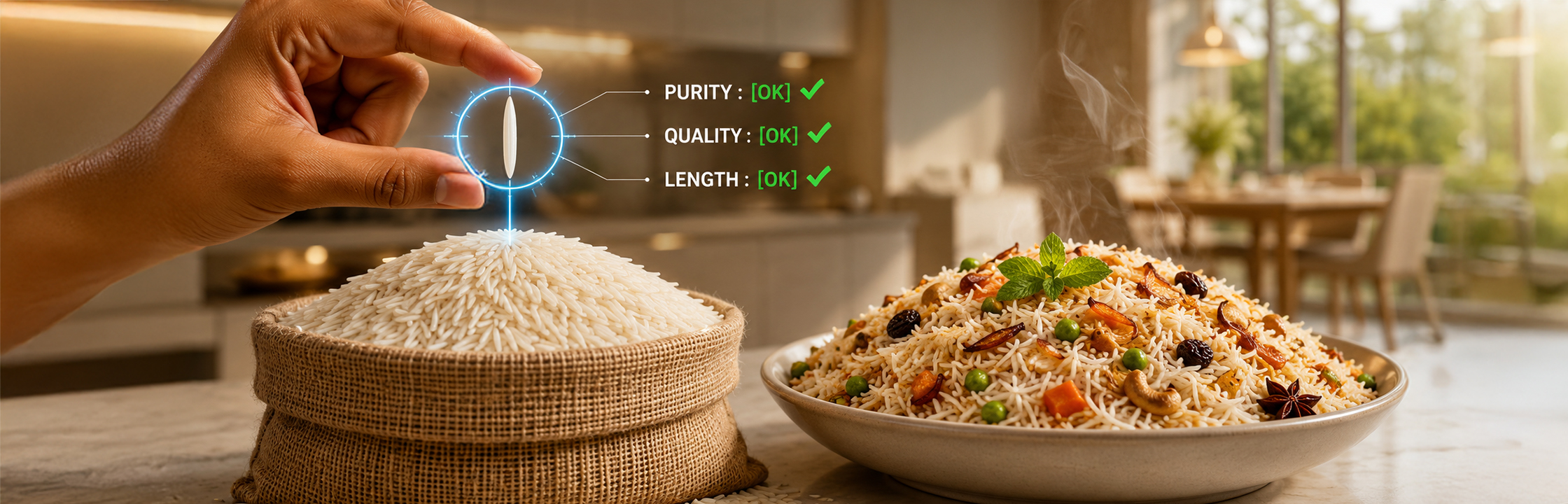
Most biryani disasters trace back to one decision made before the cooking even starts: the rice. Pick the wrong bag and you get a pot of clumpy, broken, starchy mush no amount of saffron or fried onions can rescue. Pick the right one and even a modest recipe turns out grains that separate, stay fluffy, and carry that unmistakable basmati scent through the kitchen.
This SSIEL guide breaks down exactly what to check on a bag of basmati rice before you buy it, why each factor matters at a chemical and cooking level, and how to run a quick home test if you’re ever unsure about a brand.
|
Key Takeaways
|
What Makes Basmati Rice the Best Choice for Biryani?
The short answer: grain length and ratio, natural aging, genuine aroma, and consistent grading, together, not any single one alone. A rice that scores well on length but was milled fresh last month will still turn out sticky. A well-aged rice with short, broken grains won’t give you the visual “pop” biryani is known for. The sections below walk through each factor and how to check for it before you buy.
Why Grain Length Isn’t Just a Marketing Line
Premium export-quality basmati typically measures somewhere between 6.6 mm and 8.6 mm in raw grain length, with a length-to-width ratio above 3:1. That ratio matters more than the raw number, because it’s what lets the grain stretch lengthwise during cooking instead of swelling sideways and turning mushy.
This is why basmati behaves so differently from ordinary long-grain rice. Most rice absorbs water and expands in width. Basmati absorbs water and stretches, cooked grains can end up roughly 1.5 to 2 times their raw length while staying slender. That’s the “pop” you’re looking for on a biryani plate: distinct, separate grains, not a compacted rice block.
When you’re comparing bags, hold a small handful up to the light. Uneven lengths, a lot of broken pieces, or grains that look stubby rather than needle-thin are early warning signs, regardless of what the packaging claims.
Does the Smell Actually Tell You Anything?
Yes, and it’s one of the few quality checks you can do without cooking a single grain. Authentic basmati owes its fragrance to a naturally occurring compound, 2-acetyl-1-pyrroline, which forms during the grain’s development in the field. A fresh, nutty, faintly floral smell when you open the bag is a genuine indicator of authenticity, not just good marketing copy.
That said, aroma alone isn’t proof of cooking quality. Rice can smell right and still cook poorly if it’s under-aged or poorly milled. Treat smell as one signal among several, not the whole verdict.
Why Aging Changes How Rice Cooks
Here’s where a lot of home cooks get the reasoning backwards. Aging isn’t about flavor development the way it is with wine or cheese, it’s a physical and chemical shift inside the grain. As basmati rice sits in storage, its moisture content drops, its starch-protein bonds loosen slightly, and its amylose content changes. The practical result: aged grains absorb water more readily during cooking and elongate further without falling apart.
Grains aged between roughly 12 and 24 months show the best balance of elongation, texture, and reduced stickiness. Rice aged much beyond that range doesn’t necessarily keep improving, and rice that’s too fresh tends to hold more moisture, which is exactly why freshly milled basmati often turns gummy in a biryani pot even when the grain length looks impressive on paper.
If a brand states an aging period on the packaging, that’s useful information. If it doesn’t, the color and cooking test below become more important.
What Grain Color Is Telling You
Freshly milled basmati is often closer to bright white. As it ages, natural moisture loss gives the grain a slightly creamy or off-white tone. So paradoxically, a rice that looks “less white” is often the better-aged, better-cooking option, not a lower-quality one.
While you’re looking at color, check for consistency too. Export-quality basmati keeps broken grains under about 5% of the batch and should be largely free of chalky (opaque, brittle) grains, discoloration, and unmilled red streaks. A bag with a lot of visual inconsistency, some grains long and slender, others short and opaque, usually points to mixed-batch or lower-grade sourcing, whatever the front label says.
Starch Content: The Rinse Test
High surface starch is what makes rice clump. It’s not necessarily a sign of bad rice, it’s a normal part of milling, but it needs to be dealt with before cooking, not after.
Rinse the rice under running water, swirling it gently, until the water runs mostly clear instead of cloudy. Three to five rinses is typical. Some cooks soak for 20–30 minutes afterward, which helps the grains hydrate evenly and can reduce breakage during cooking. Skipping this step is one of the most common reasons biryani turns out sticky even when the rice itself is of decent quality.
The Five-Minute Cooking Test
If you’re trying a new brand and the label claims don’t tell you enough, cook a small test batch, half a cup is plenty, before committing to it for a big biryani.
What to watch for:
- Elongation without breaking. Grains should visibly lengthen and stay whole.
- Separation. Cooked grains should fall apart easily with a fork, not stick together in clumps.
- Texture. Look for a light, fluffy bite, not gummy, not chalky-hard in the center.
- Aroma while cooking. The scent should intensify, not disappear or turn flat.
This test takes less time than the rest of your biryani prep and tells you more than any single label claim, because you’re watching the rice do exactly what it will do in the final dish.
Fresh vs. Aged Basmati: A Quick Comparison
| Factor | Fresh-Milled Basmati | Properly Aged Basmati (12–24 months) |
|---|---|---|
| Moisture content | Higher | Lower |
| Elongation during cooking | Limited, can break | Longer, holds shape |
| Stickiness | More prone to clumping | Grains stay separate |
| Color | Bright white | Slight cream/off-white tint |
| Best used for | Everyday meals, quick pulao | Biryani, layered rice dishes |
Common Mistakes When Buying Basmati for Biryani
- Judging quality by whiteness alone. As covered above, this often works against you.
- Skipping the rinse. Even premium rice turns sticky if surface starch isn’t removed first.
- Assuming “long grain” on the label means basmati-length. Regular long-grain rice can be 6+ mm too, but it lacks basmati’s elongation ratio and aroma compounds.
- Buying based on price alone. Aging and grading add real cost. Rice priced well below the category average is rarely aged the full 12–24 months.
- Ignoring the water ratio. Even excellent rice turns out wrong if you’re using a stovetop pulao ratio for a dum biryani method, or vice versa. Check the cooking method the rice is suited for, not just the grain.
Where a Brand Like Leysha Fits Into This Checklist
Leysha Basmati Rice, produced by SSIEL, a basmati exporter with decades of export experience in the Indian rice trade, is built around the same criteria this guide walks through: extra-long slender grains, a natural aging process, and grading that keeps broken and chalky grains to a minimum. SSIEL‘s biryani-focused lines, including Virasat and Nayaab, are aged specifically to suit long-grain layered rice dishes rather than everyday steamed rice.
That’s a useful shortcut if you’d rather not run the cooking test on five different brands before your next biryani. But the checklist above works regardless of which bag you pick up, length and ratio, aroma, aging, color consistency, and a quick cook test will tell you more than any front-of-pack claim.
Final Word
There’s no shortcut that replaces actually looking at what you’re buying. Check the grain length and ratio, trust a genuine (not overpowering) aroma, look for that slightly creamy aged color, rinse thoroughly, and run a small cook test if you’re trying something new. Get those five things right and the rice will do its job, leaving you free to focus on the spices, the layering, and the dum.
Frequently Asked Questions
What is the ideal grain length for biryani rice?
Basmati for biryani generally falls between 6.6 mm and 8.6 mm raw, with a length-to-width ratio above 3:1. The ratio matters more than the raw length figure on its own.
How long should basmati rice be aged for biryani?
Studies on basmati storage generally point to 12–24 months as the range that balances elongation, texture, and reduced stickiness. Beyond that window, quality gains level off.
Why does my basmati rice turn out sticky even after buying a good brand?
Usually it’s surface starch that wasn’t rinsed off, overcooking, using too much water, or rice that wasn’t aged long enough despite the label. Try the rinse and soak steps above before ruling out the brand.
Is off-white basmati rice lower quality than bright white rice?
Not necessarily, often the opposite. A creamy or off-white tint is a common sign of natural aging, which improves cooking performance for dishes like biryani.
Can I use the same basmati rice for biryani and everyday meals?
You can, but aged, longer-grain basmati suited for biryani is often better reserved for special dishes, since it costs more to produce. Everyday meals don’t need the same elongation and texture that a layered dish like biryani demands.